

An effective About page on a health coaching website should build trust, explain the coach’s experience, share their approach to wellness, and help visitors understand how they can benefit from coaching. In 2027, a well-designed About page should combine a clean layout, authentic storytelling, professional credentials, client testimonials, and a clear call to action. The goal is to make visitors feel comfortable, confident, and ready to take the next step.
Why Does the About Page Matter for a Health Coaching Website?
The About page is one of the most important pages on a health coaching website. People looking for health, wellness, nutrition, fitness, or lifestyle guidance want to know who they are working with before booking a consultation.
A good About page helps visitors understand:
- Who the health coach is.
- What qualifications and experience they have.
- What health coaching services they provide.
- How their coaching approach works.
- Who they help and what problems they address.
- How visitors can get started.
A well-designed About page can turn website visitors into potential clients by making the coach’s brand more personal and trustworthy.
1. Start with a Clear and Friendly Introduction
The first section of your About page should introduce the health coach in a simple and welcoming way. Avoid complicated language or overly formal statements. Visitors should immediately understand who you are and what you do.
Make the first section clear, personal, and focused on the visitor.
For example, instead of writing a long professional introduction, use a short headline such as:
- Helping You Build a Healthier and Happier Lifestyle
- Your Partner in Personal Wellness and Healthy Living
- Supporting Your Journey Toward Better Health
Below the headline, add two or three sentences explaining your coaching philosophy and how you help people improve their daily habits.
This introduction should make visitors feel that your coaching services are approachable and relevant to their needs.
2. Use a Professional and Authentic Profile Photo
A professional photo is an important element of an About page for a health coaching website. Visitors want to see the person behind the brand rather than only reading text.
Choose a photo that looks natural, friendly, and professional. You do not need an overly edited or corporate image.
Consider these photo tips:
- Use a high-quality portrait of the health coach.
- Choose a clean and simple background.
- Wear clothing that reflects your professional style.
- Use natural lighting where possible.
- Avoid stock photos that look unrealistic.
- Use additional photos of your coaching environment if relevant.
A genuine photo can help visitors feel more connected to the coach and make the website feel more personal.
3. Share Your Personal Health Coaching Story

People often connect with health coaches because of their personal experiences, professional journeys, or passion for helping others. Your About page is a good place to share that story.
Explain what inspired you to become a health coach and why you enjoy helping people improve their well-being.
Your story might include:
- Your interest in healthy living and wellness.
- What inspired you to pursue health coaching.
- Your professional education and training.
- Your experience working with clients.
- Your personal philosophy about sustainable lifestyle changes.
Keep your story honest and easy to understand. Avoid making unrealistic health promises or suggesting that your personal experience guarantees the same results for every client.
4. Highlight Your Qualifications and Professional Experience
Health coaching involves personal wellness decisions, so visitors may want to know about your education, training, and professional experience before choosing your services.
Create a dedicated section to highlight your qualifications.
Include information such as:
- Health coaching certifications.
- Nutrition or wellness education.
- Relevant professional training.
- Years of coaching experience.
- Areas of coaching specialization.
- Professional memberships, where relevant.
Use short bullet points instead of long paragraphs to make the information easy to scan.
Only display qualifications that you genuinely hold. If your coaching focuses on general wellness and lifestyle habits, clearly explain the scope of your services and avoid presenting yourself as a medical professional unless you are qualified to do so.
5. Explain Your Health Coaching Approach
Visitors want to understand what makes your coaching different from other health coaches. This is where you can explain your coaching philosophy and the methods you use to support clients.
For example, you may focus on:
- Building sustainable healthy habits.
- Supporting better daily routines.
- Improving motivation and accountability.
- Helping clients set realistic wellness goals.
- Encouraging balanced nutrition and physical activity.
- Supporting stress management and self-care.
Use simple language to explain how your coaching process works.
You can also introduce your coaching process in four steps:
- Initial consultation: Understand the client’s goals, lifestyle, and challenges.
- Personalized plan: Create a realistic wellness plan based on their needs.
- Regular coaching: Provide guidance, support, and accountability.
- Progress review: Review goals and adjust the approach when necessary.
This helps visitors understand what to expect when they work with you.
6. Use a Clean and Simple About Page Layout
The design of your About page should make information easy to read and navigate. Avoid overcrowding the page with too much text, too many images, or unnecessary design elements.
A clean website layout can improve the user experience and help visitors focus on your message.
Design elements to consider:
- White space: Give sections enough space to breathe.
- Readable fonts: Use simple fonts with comfortable text sizes.
- Soft colors: Consider natural colors such as green, beige, white, and light blue.
- Consistent headings: Use a clear heading structure.
- Mobile-friendly design: Make sure the page looks good on smartphones.
- Simple navigation: Make it easy for visitors to explore other pages.
Your design should reflect your coaching brand and create a calm, welcoming experience.
7. Add Client Testimonials and Success Stories
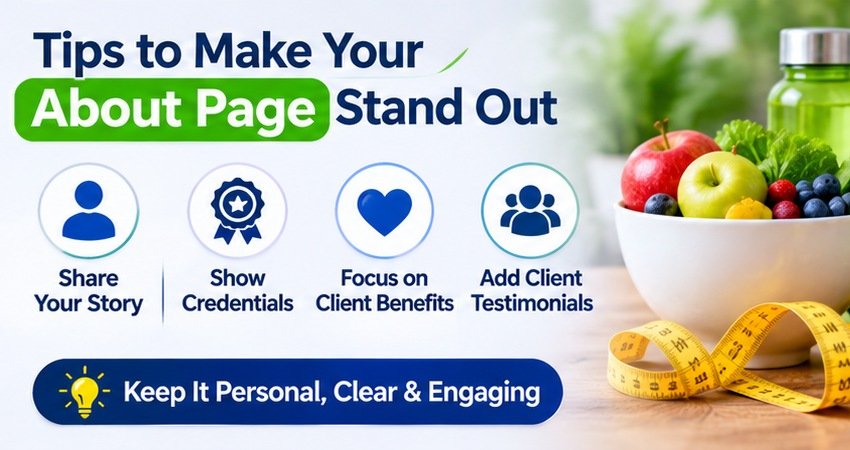
Testimonials can help visitors understand what working with a health coach feels like. Genuine feedback from previous clients may also strengthen trust in your services.
You can include testimonials that describe:
- The coaching experience.
- Improvements in daily habits.
- Better confidence in making lifestyle decisions.
- Support and accountability.
- Positive experiences with the coaching process.
Use real testimonials with permission. Avoid exaggerated claims, misleading before-and-after images, or promises of specific medical or weight-loss outcomes.
Keep testimonials short and readable. You can also add the client’s first name or initials if they have agreed to share their feedback.
8. Clearly Explain Who You Help
A good About page should help visitors identify whether your coaching services are suitable for them.
Instead of trying to serve everyone, explain the types of people you work with and the lifestyle challenges you help them address.
For example, your coaching may be designed for:
- People looking to develop healthier daily habits.
- Busy professionals who want to improve their wellness routines.
- Individuals seeking support with lifestyle changes.
- People who want to improve their understanding of balanced nutrition.
- Individuals looking for motivation and accountability.
This section can help potential clients understand whether your coaching matches their goals.
9. Add a Clear Call to Action
After visitors learn about your background, experience, and coaching approach, give them a clear next step.
Your call to action (CTA) should be simple and easy to find. Avoid using too many different buttons or asking visitors to complete complicated forms.
Examples of CTA buttons include:
- Book a Free Consultation
- Schedule Your Wellness Session
- Start Your Health Coaching Journey
- Contact Your Health Coach
- Learn About Coaching Services
Place a CTA near the introduction, after your coaching approach, and at the bottom of the About page where appropriate.
Make sure the button links to your booking page, contact page, or consultation form.
10. Optimize Your About Page for SEO in 2027

SEO is important for helping people discover your health coaching website through search engines. A well-optimized About page can support your website’s overall SEO strategy and help search engines understand your business, services, and expertise.
On-page SEO tips:
- Use a relevant keyword naturally in your page title.
- Write a unique meta description.
- Use one clear H1 heading.
- Organize the content using relevant H2 and H3 headings.
- Add descriptive alt text to images.
- Link to your coaching services, blog posts, and contact page.
- Use a mobile-friendly design.
- Improve page loading speed.
- Keep your content clear, useful, and accurate.
For a health coaching website, trust and accuracy are especially important. Google considers experience, expertise, authoritativeness, and trustworthiness in its quality guidance, particularly for topics that can affect people’s health.
Your About page should accurately communicate your real experience, qualifications, and coaching expertise instead of relying on exaggerated claims.
11. Make Your About Page Mobile-Friendly
Many visitors browse health coaching websites on their smartphones. If your About page is difficult to read or navigate on mobile, visitors may leave without exploring your services.
Check that:
- Text is readable without zooming.
- Images resize correctly.
- Buttons are easy to tap.
- The menu works properly.
- Sections do not look crowded.
- Forms are simple to complete.
- The page loads quickly.
A mobile-friendly About page creates a smoother experience for visitors using different devices.
12. Common About Page Design Mistakes to Avoid
When designing an About page for a health coaching website, avoid mistakes that can reduce trust or make the page difficult to use.
- Too much text: Keep paragraphs short and divide content into sections.
- Unprofessional images: Use genuine, high-quality photos.
- Missing qualifications: Clearly explain your relevant training and experience.
- No call to action: Give visitors a clear way to contact you.
- Unrealistic health claims: Avoid guarantees about health, weight loss, or treatment outcomes.
- Poor mobile design: Test your page on smartphones and tablets.
- Generic content: Share your own coaching philosophy and experiences.
- Slow loading speed: Optimize images and reduce unnecessary website elements.
Avoiding these mistakes can help create a more professional and user-friendly About page.
Frequently Asked Questions (FAQs)
1. What should an About page include on a health coaching website?
An About page should include the health coach’s introduction, personal story, qualifications, professional experience, coaching philosophy, target audience, testimonials, and a clear call to action.
2. How do I make my health coaching About page more trustworthy?
Use authentic photos, real client testimonials, relevant certifications, honest descriptions of your experience, and clear information about your coaching services. Avoid unrealistic health claims.
3. What is the best design for a health coaching About page?
A clean, simple, and mobile-friendly design works best. Use readable fonts, natural colors, clear headings, authentic photos, short paragraphs, and enough white space to make the page easy to navigate.
4. Is the About page important for SEO?
Yes. An About page can help search engines and visitors better understand your business, professional background, services, and expertise. It can also support trust and the overall quality of your website.
5. What call to action should I use on a health coaching About page?
Use a clear call to action such as “Book a Free Consultation,” “Start Your Health Coaching Journey,” or “Schedule Your Wellness Session.” The CTA should direct visitors toward booking, contacting you, or learning more about your services.
Conclusion
Designing an effective About page for a health coaching website in 2027 requires a combination of professional design, personal storytelling, clear information, and trust-building elements. Start with a friendly introduction, share your coaching story, highlight your qualifications, explain your coaching approach, and include genuine testimonials. Use a clean layout, mobile-friendly design, SEO-friendly headings, and clear calls to action to help visitors understand your services.
A well-designed About page is more than a place to share your biography. It is an opportunity to connect with potential clients, communicate your values, and encourage people to take the next step toward working with you.
Leave a Reply